Breast augmentation RC3140218


Description of the case before and after
BREAST AUGMENTATION
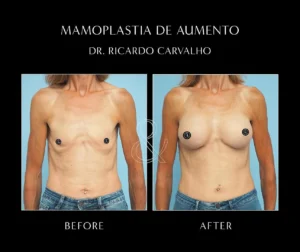
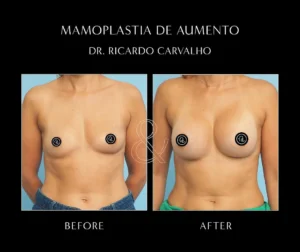
This young woman had severe breast atrophy. This is a common consequence of pregnancy. The breast was completely empty, with no projection and some sagging (you can see the excess skin in the area below the areola). These changes have a very significant negative impact on a woman's self-esteem, disrupting her mental health and well-being.
Her desire was to recover the lost volume, increase the size of the breast, its projection, recovering an accentuated but harmonious neckline.
According to their wishes and expectations, the following were chosen round prostheseshigh-profile, nano-textured 425cc motorbikes.
The prostheses were placed through the lower part of the areola. The submuscular technique was used, with an internal strap, i.e. the prostheses were placed behind the muscle and a part of this muscle supports the prosthesis, which helps the prostheses not to fall off so quickly (also called an internal bra).
This breast augmentation was performed using general anaesthesia and selective nerve blocks in the breast, which allowed the patient to wake up pain-free and move her arms freely a few hours after surgery. This type of anaesthesia significantly improves the quality of surgery. recovery after surgeryAnaesthesia improves quality of life, speeds up recovery and increases satisfaction with the procedure. This type of anaesthesia requires a team working together and a trained anaesthesiologist.
The images show the result four months after the surgery.
Each patient is different, but with the right care, it is possible to achieve almost unnoticeable scars.
All the images are taken without filters, so you can get a real sense of the possibilities of plastic surgery.
Note: The images shown on this page are real examples of treatments carried out by Dr Ricardo CarvalhoThese are published with the prior, free and informed consent of the users involved, respecting the rules on the protection of personal data and the right to an image.
It is important to note that results may vary from person to person, depending on individual conditions and the clinical assessment carried out. These images are not a guarantee of similar results in other cases.
The decision to carry out any treatment should be made after a personalised medical consultation and assessment, ensuring that the procedure is suited to your specific needs and conditions.